The Complete Dachshund Care Guide: Health, Training, Food & Grooming
Everything you need to know about Dachshund health care, training tips, best food for Dachshunds, grooming (including long-haired Dachshund grooming), and the coats and colors that make this breed so unmistakable.
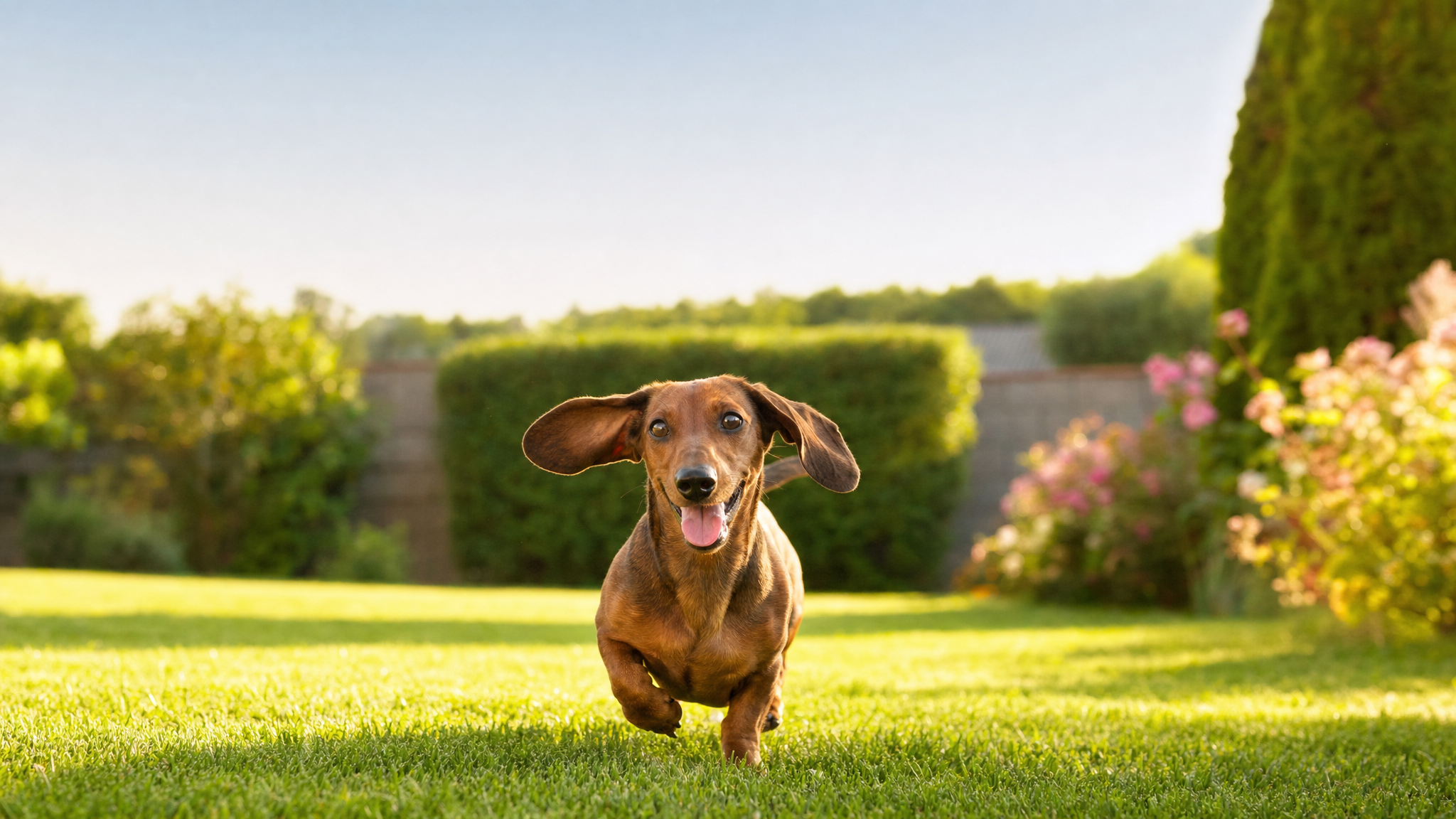
Dachshunds are proof that big personality doesn’t need a big body. These low-slung, long-bodied little dogs pack more confidence, curiosity, and comedic timing into 8-9 inches of height than almost any other breed. But that same unique build — the one that makes them so charming — also comes with specific care needs that every Dachshund owner (or soon-to-be owner) really should understand.
This guide covers it all: a quick dip into Dachshund history, the different coat types and colors, the health issues to watch for, and practical Dachshund care tips, Dachshund training tips, the best food for Dachshunds, and Dachshund grooming tips — including specific guidance for the long-haired Dachshund grooming routine, which is a different job entirely from grooming a smooth-coat.
A Brief History of the Dachshund
The Dachshund’s story starts in 16th-century Germany, where breeders wanted a dog low and long enough to chase badgers, rabbits, and other burrowing animals straight into their tunnels, while still being fierce and tenacious enough to hold its ground underground. By the 18th and 19th centuries, the breed had been refined into roughly the dog we know today, and different sizes emerged — the standard Dachshund for badgers and larger prey, and the miniature Dachshund for rabbits and smaller game.
Dachshunds crossed into America in the late 1800s and quickly became a beloved companion breed rather than a working hunter for most owners — though the instincts (digging, chasing, and a surprisingly loud bark for their size) are still very much alive in the breed today.
Dachshund Coat Types & Colors
One of the most distinctive things about Dachshunds is that they come in three coat types and a wide range of colors and patterns — so no two Dachshunds ever look quite the same.
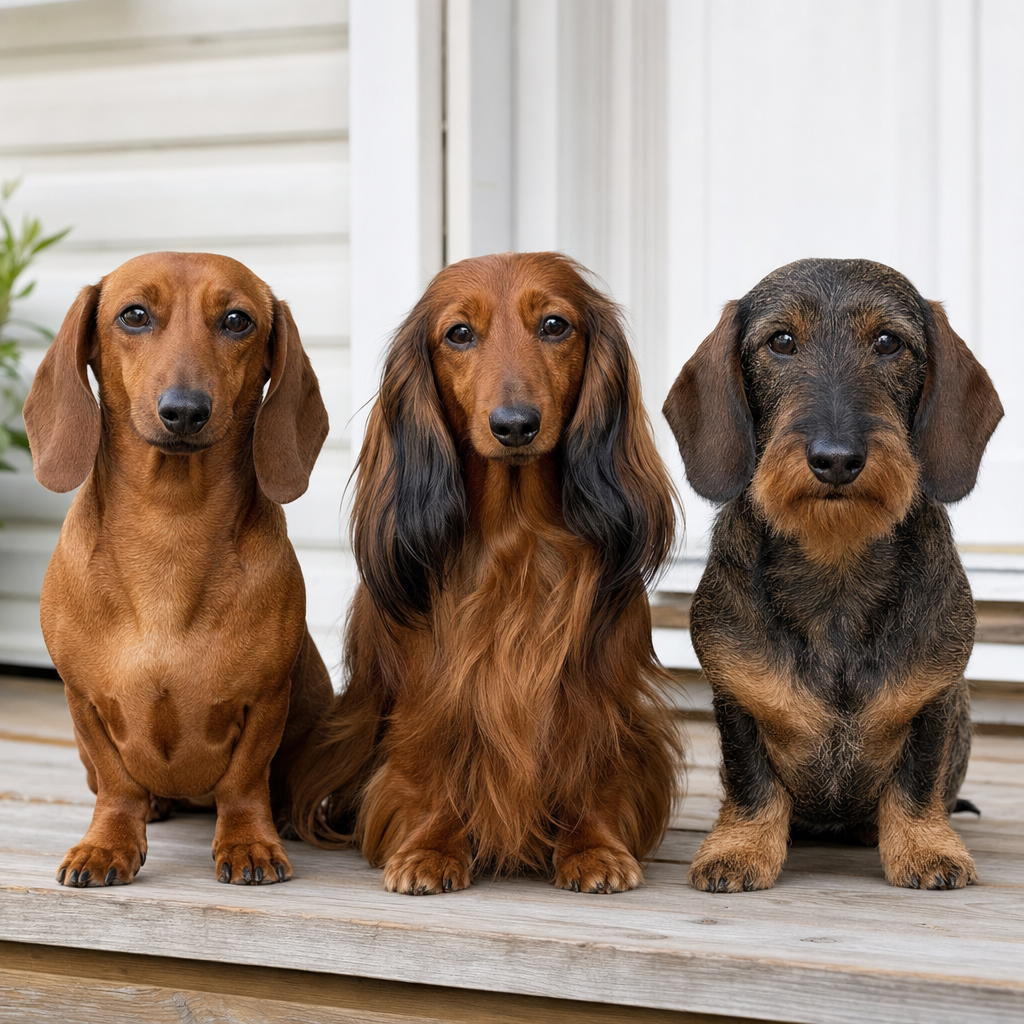
| Coat Type | Texture | Grooming Needs |
|---|---|---|
| Smooth | Short, shiny, close to the body | Low — occasional wipe-down and light brushing |
| Long-Haired | Silky, flowing, feathered ears and legs | High — regular brushing, occasional trimming |
| Wire-Haired | Dense, wiry, textured with a beard and eyebrows | Moderate-High — hand-stripping or clipping needed |
As for color, Dachshunds come in an impressive variety, including:
- Red — the most common and recognizable color
- Black and Tan — a classic, striking combination
- Chocolate and Tan
- Cream
- Dapple (Merle) — a mottled, marbled pattern
- Brindle — tiger-like striping over a base color
- Piebald — bold white patches over a base color
Common Dachshund Health Issues
That long back and short legs are adorable, but they also make Dachshunds prone to a few specific health concerns every owner should watch closely.
- Intervertebral Disc Disease (IVDD) — By far the biggest concern for Dachshund health care. Their elongated spine puts extra strain on the discs between vertebrae, and something as simple as jumping off a couch can cause a slipped or ruptured disc, leading to pain, paralysis, or worse. Prevention is everything here (see care tips below).
- Obesity — Extra weight puts direct, dangerous pressure on that long spine. Keeping a Dachshund lean isn’t just about aesthetics — it’s genuinely one of the most protective things you can do for their back.
- Dental Disease — Small mouths and crowded teeth make Dachshunds prone to plaque buildup and periodontal disease. Regular dental care matters more than people expect.
- Patellar Luxation — A dislocating kneecap that’s more common in small breeds generally, including Dachshunds.
- Progressive Retinal Atrophy (PRA) — An inherited eye condition that can lead to gradual vision loss, more common in certain color lines (particularly dapples).
Dachshund Care Tips: Protecting That Long Back
Given how central spinal health is to this breed, general Dachshund care tips mostly revolve around protecting that long back while keeping your dog active and happy:
- Use ramps or steps for any furniture your Dachshund likes to jump on or off of.
- Carry them for stairs when possible, especially as they age or if they show any signs of back sensitivity.
- Keep them lean. A Dachshund at a healthy weight has dramatically lower spinal injury risk than an overweight one.
- Support their body properly when picking them up — one hand under the chest, one under the hindquarters, never lifting by the front legs or scruff alone.
- Limit high-impact play like jumping for frisbees or repeated stair-sprinting.
- Schedule regular vet checkups to catch dental, weight, or early spinal issues before they become serious.
Best Food for Dachshunds
Because weight management is so tightly linked to spinal health, diet plays an outsized role in a Dachshund’s overall wellbeing. Here’s what to look for in the best food for Dachshunds:
🥩 Look For
High-quality animal protein as the first ingredient, moderate healthy fats, controlled calorie density formulated for small breeds, and joint-supporting nutrients like glucosamine and omega-3 fatty acids.
🚫 Avoid
Excess fillers (corn, soy as primary ingredients), free-feeding (leaving food out all day), and too many high-calorie treats — every extra pound matters more on a Dachshund’s frame than on a larger breed.
- Portion control matters more than the specific brand. Follow feeding guidelines based on your dog’s ideal weight, not their current weight if they’re already carrying extra pounds.
- Small-breed formulas are often a smart choice, since kibble size and calorie density are typically better matched to a Dachshund’s small mouth and metabolism.
- Senior Dachshunds often benefit from joint-support formulas given how common spinal and joint issues become with age.
- Treats should stay under 10% of daily calories — easy to overlook with a breed this good at giving “I’m starving” eyes.
Dachshund Training Tips
Dachshunds are smart, stubborn, and famously independent-minded — which makes training rewarding but occasionally frustrating if you don’t work with their personality rather than against it. Here are the most effective Dachshund training tips:
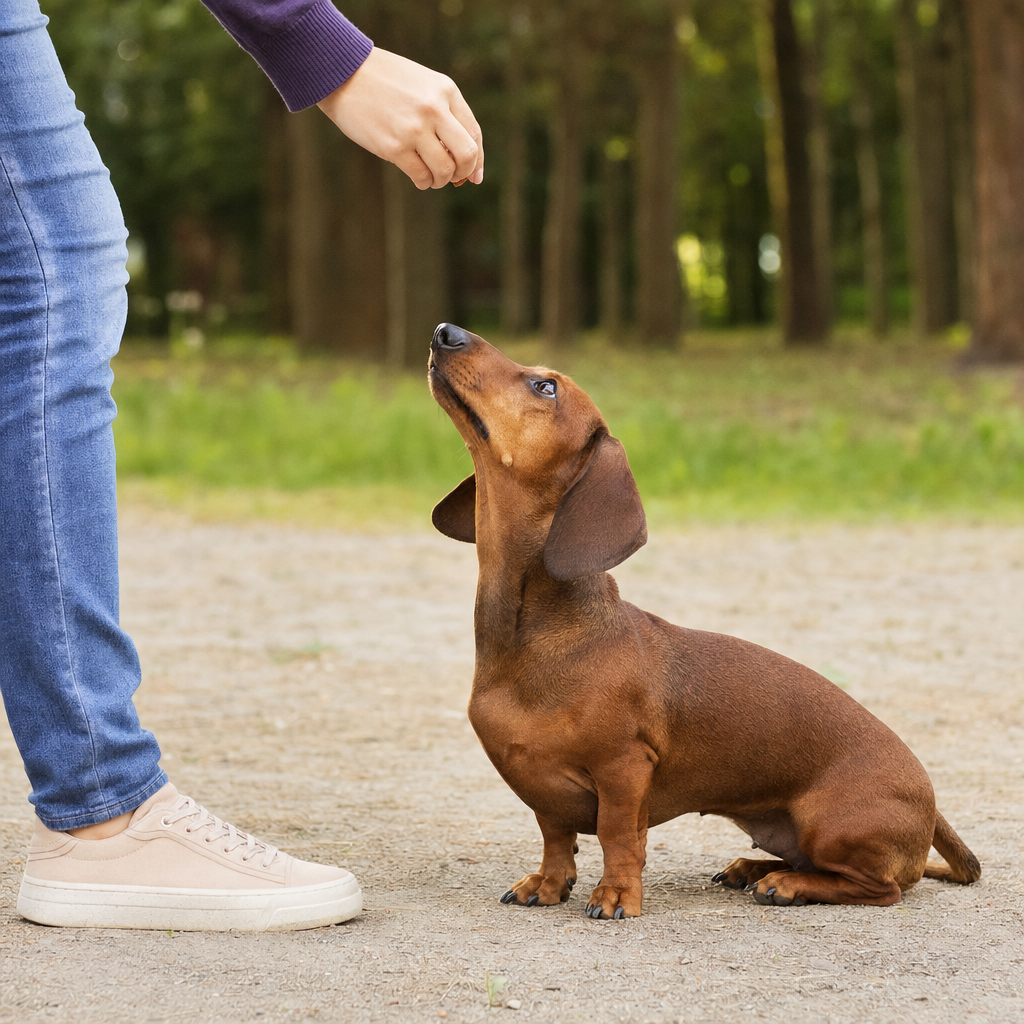
- Keep sessions short. 5-10 minutes at a time works far better than long sessions — Dachshunds lose interest fast if training drags on.
- Use high-value treats. Their food motivation is strong — use it. Small, soft treats work best for quick repetition.
- Be consistent, not forceful. Dachshunds shut down or dig in their heels against harsh correction. Positive reinforcement wins every time with this breed.
- Start crate training early. It helps enormously with housebreaking, which can be a genuine challenge with this stubborn little breed.
- Socialize early and often. Dachshunds can be territorial and vocal toward strangers or other dogs without enough early exposure.
- Redirect the digging instinct. It’s bred into them — give them a sandbox or designated digging spot rather than fighting the urge entirely.
Dachshund Grooming Tips
Grooming needs vary significantly depending on which coat type your Dachshund has, so let’s break this down properly.
Smooth-Coat Grooming
- Weekly brushing with a rubber curry brush or grooming mitt to remove loose hair and distribute natural oils
- Occasional bathing (every 4-6 weeks, or as needed)
- Regular nail trims — their nails grow quickly and overly long nails affect gait and posture
Wire-Haired Grooming
- Hand-stripping (removing dead hair by hand or with a stripping tool) 2-3 times per year for show-quality coats, or regular clipping for pet coats
- Weekly brushing to prevent matting around the beard and eyebrows
- Facial hair trims to keep eyes and mouth clear
Long-Haired Dachshund Grooming Tips
This is the coat type that needs the most consistent attention, so if you own a long-haired Dachshund, here’s your specific routine:

- Brush 2-3 times per week minimum using a slicker brush or pin brush, paying close attention to the ears, chest feathering, legs, and tail — these areas mat fastest.
- Check behind the ears and under the legs every brushing session — these hidden spots are where mats sneak up fastest.
- Trim the feathering around the paws and ears periodically to prevent excessive matting and keep things tidy, especially in muddy or wet weather.
- Bathe every 3-4 weeks with a gentle dog shampoo, always brushing out any tangles before bathing (wet mats tighten and become much harder to remove).
- Use a leave-in conditioner spray for long coats to keep hair silky and reduce static and tangling between baths.
- Schedule a professional groom every 6-8 weeks if you want to maintain a neat, show-style coat, or simply for a thorough de-shedding and trim.
Putting It All Together: A Weekly Dachshund Care Checklist
| Task | Smooth Coat | Long-Haired Coat |
|---|---|---|
| Brushing | 1x/week | 2-3x/week |
| Bathing | Every 4-6 weeks | Every 3-4 weeks |
| Nail Trim | Every 3-4 weeks | Every 3-4 weeks |
| Teeth Brushing | 3-5x/week | 3-5x/week |
| Training Session | 5-10 min, daily | 5-10 min, daily |
| Weight Check | Monthly | Monthly |
🌭 Love the Dachshund breed as much as we do? Explore more breed guides, ethical breeder directories, and dog-lover content.
Final Thoughts
Dachshunds are a wonderfully rewarding breed to own — funny, affectionate, and endlessly determined — but their unique build means their care really does require a bit more intention than an average dog. Protecting that long spine, staying on top of weight and dental health, feeding a diet built for their specific needs, training with patience instead of force, and keeping up with coat-specific grooming (especially if you’ve got a long-haired Dachshund on your hands) will keep your “wiener dog” happy and healthy for years to come.
Get these fundamentals right, and you’ll have a loyal, spirited companion who proves, once again, that great things really do come in small (if slightly stretched-out) packages.