
Last Updated: September 3, 2026
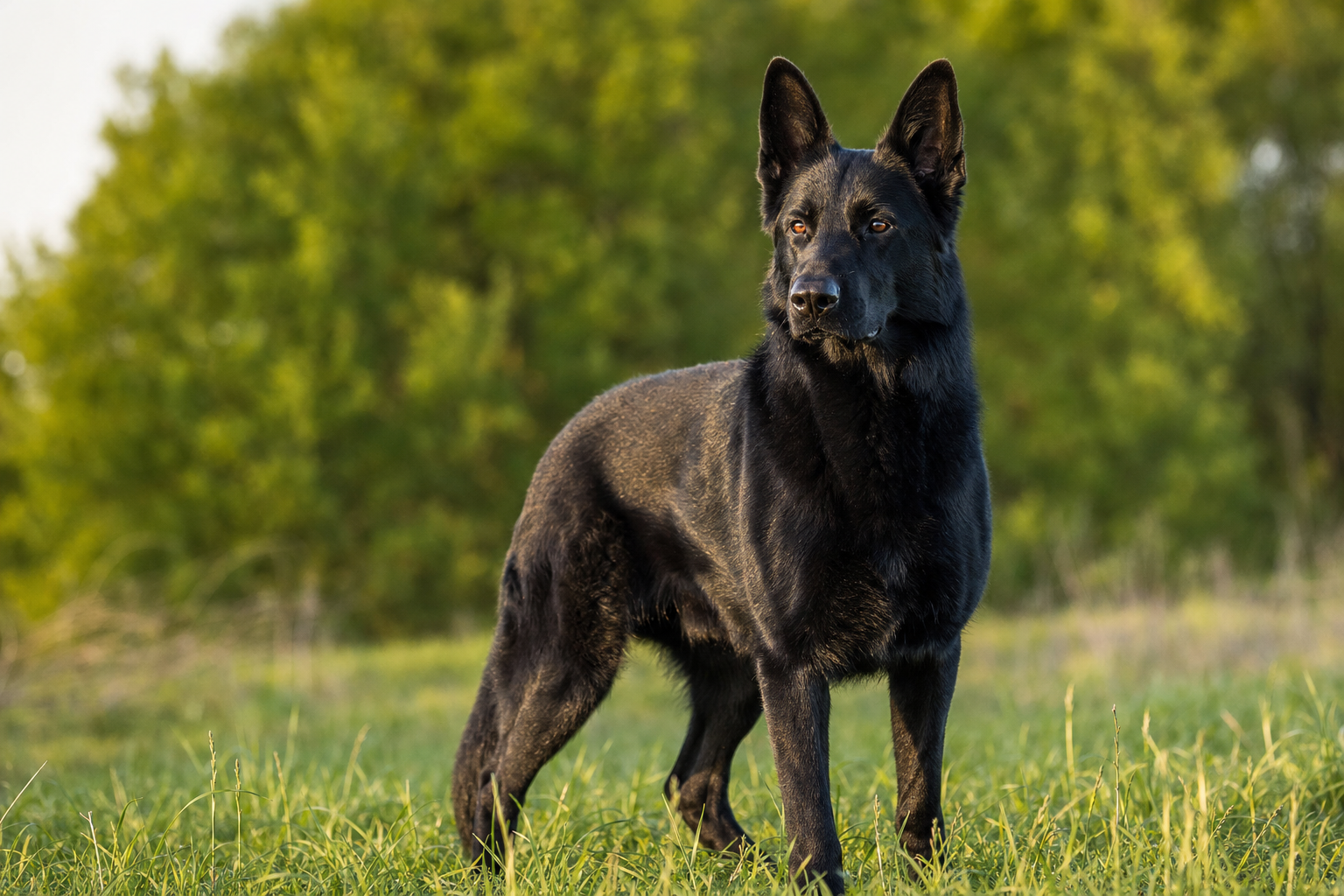
If you’ve ever seen a black German Shepherd walk into a room, you know exactly why people stop and stare. That sleek, all-black coat, the confident stride, the intelligent eyes — it’s a showstopper.
When I was a boy, our family had a pure black German Shepherd named Gretchen. And soon after we brought Gretchen home, my parents brought my baby sister, Bonita, home. Sensing Bonita’s vulnerability, Gretchen rarely left her side. What a great dog!
But here’s the thing most people don’t realize: black German Shepherds aren’t a separate breed, a “designer” variant, or some rare crossbreed. They’re 100% purebred German Shepherd Dogs, they just happen to carry a specific genetic combination that turns off every color except black.
If you’re on the hunt for the best black German Shepherd for your family, or you already have one and want to raise them right, this guide covers everything — the genetics behind the color, how rare they really are, how they stack up against the classic tan-and-black Shepherd, where to find an ethical breeder, and how to keep your black Shepherd healthy and happy for life.
What Makes a German Shepherd “Black”?
Every German Shepherd’s coat color comes down to genetics — specifically, two genes that control pigment: the Agouti gene (A) and the Recessive black gene (K locus). Most German Shepherds you see are the classic tan-and-black or sable pattern, but a black German Shepherd carries a solid recessive black gene from both parents. That means:
- Both parents must carry the black gene (even if they don’t look black themselves).
- Solid black is recessive, so it only shows up when a puppy inherits the gene from both mom and dad.
- It’s not dyed, faded, mixed, or a health condition — it’s pure genetics, plain and simple.
This is also why solid black puppies pop up unpredictably, even in litters where neither parent is black. If both parents are “carriers,” you can get a surprise all-black pup in an otherwise standard litter.
Just How Rare Are Black German Shepherds?
Short answer: quite rare. Most breed estimates put solid black German Shepherds at roughly 6-15% of the total German Shepherd population, depending on the source and region. Compare that to the classic tan-and-black or sable coloring, which makes up the vast majority of Shepherds worldwide — think 65-85% of the breed.
Here’s a simple breakdown of how the coat colors compare:
| Coat Color | Approx. % of GSD Population | Genetic Cause | Common Perception |
|---|---|---|---|
| Black & Tan / Black & Red (classic) | 65-85% | Standard agouti pattern | “Traditional” GSD look |
| Sable | 10-15% | Agouti gene variant | Working-line favorite |
| Solid Black | 6-15% | Recessive black (both parents carry it) | Rare, striking, often sought-after |
| White | Rare (often excluded from AKC standard) | Recessive white gene | Controversial in some breed clubs |
| Liver/Blue (diluted) | Very rare | Dilution gene | Considered a fault by most standards |
Because solid black is uncommon, it’s also become one of the most requested colors by families and enthusiasts — which unfortunately means it’s a color some backyard breeders and puppy mills exploit by charging inflated “rare color” premiums. More on spotting that below.
Black German Shepherd vs. Traditional German Shepherd: What’s Actually Different?
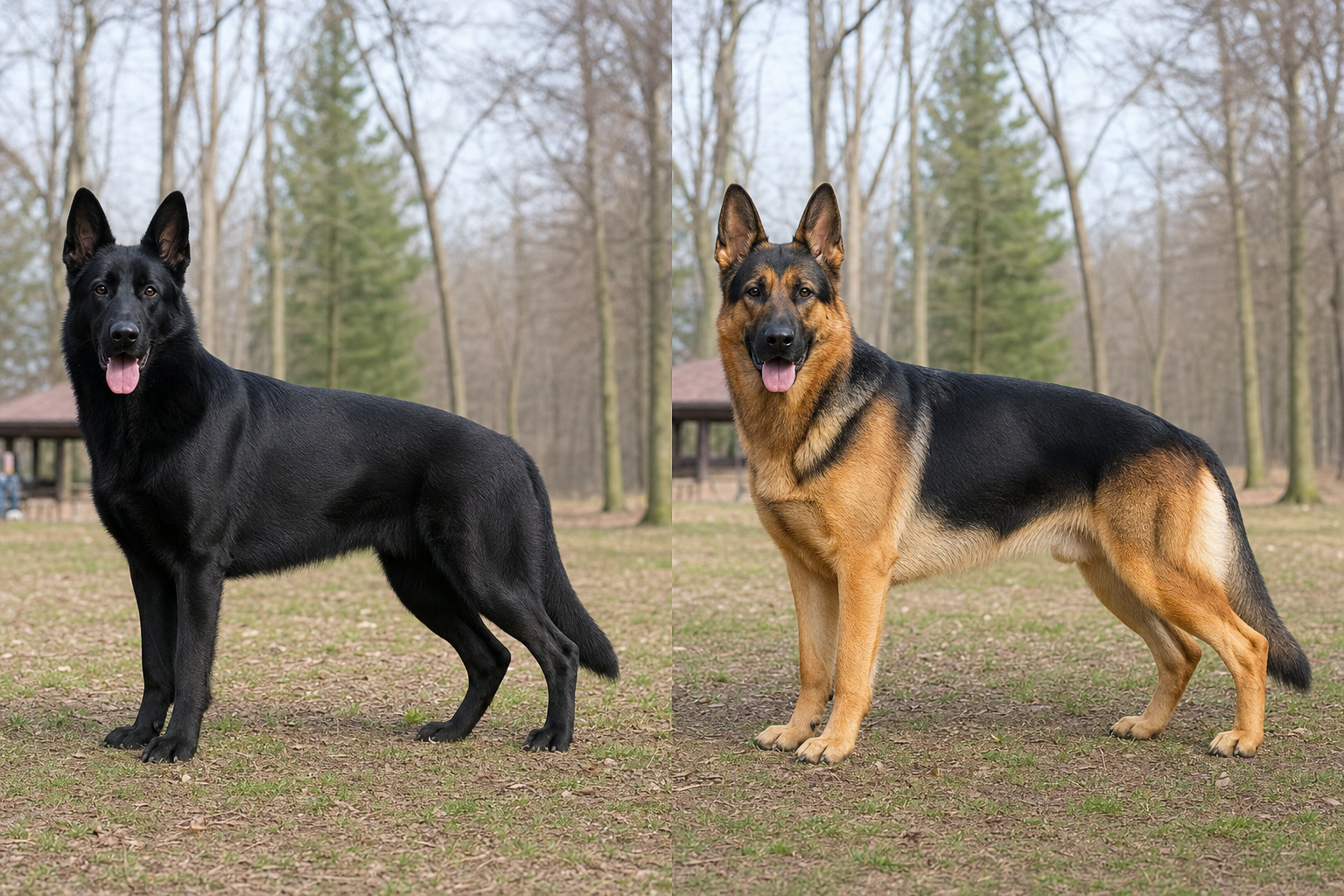
This is the question everyone asks, and the honest answer is: almost nothing except the coat. Let’s break it down.
- Temperament — Identical. Coat color has zero effect on personality, trainability, or working drive. A black GSD is just as loyal, intelligent, and protective as any other Shepherd.
- Size & Build — The same breed standard applies. Males typically run 65-90 lbs, females 50-70 lbs, with the same athletic, sloped-back build (in working-line dogs, often straighter backs).
- Health — Same predispositions to hip/elbow dysplasia, bloat, and degenerative myelopathy. Color doesn’t add or remove health risk — genetics from a specific bloodline does.
- Coat Type — Can be double-coated (most common) or long-haired, same as any GSD.
- Price — This is where it does differ. Because black GSDs are rarer, ethical breeders often price them somewhat higher, and less scrupulous sellers price them dramatically higher, banking on the “rare and exotic” appeal.
- AKC/Registry Recognition — Solid black is a fully recognized, standard color under AKC and most kennel clubs — it’s not a fault or disqualification like blue, liver, or white can be in some standards.
Bottom line: if you want a black German Shepherd because you love the look, that’s a completely valid reason — just don’t expect (or pay for) a “different” or “upgraded” dog. You’re getting a German Shepherd with a striking coat, nothing more, nothing less.
How to Find the Best Black German Shepherd Breeder
This is where most people get burned. Because black coats are in high demand, unethical breeders will slap “rare black German Shepherd” on a listing and charge two or three times a fair price — sometimes while cutting corners on health testing, socialization, or living conditions. Here’s how to vet a breeder properly:
Red Flags to Avoid
- Breeder markets the puppy as a “rare breed” or “extremely rare bloodline” (it’s a color, not a breed).
- No health clearances offered for hips, elbows, or DM (degenerative myelopathy) on the parents.
- Multiple litters available “in stock” at once, or litters always available.
- Refuses to let you visit in person or video-call to see the puppy with its mother.
- Pressure tactics — “the last black one,” “deposit due today,” etc.
- Price is dramatically above local market average with no clear justification (health testing, titles, bloodline).
Green Flags of an Ethical Breeder
- Provides OFA or PennHIP hip/elbow certifications for both parents.
- Health-tests for degenerative myelopathy (DM) and other breed-specific conditions.
- Lets you meet the puppy’s mother (and father, if on-site) in person.
- Has a waitlist rather than puppies “always available.”
- Offers a written health guarantee and take-back clause if things don’t work out.
- Is transparent about the litter’s genetics — including why some pups are black and others aren’t.
- Asks you questions too — a good breeder screens homes, not just buyers screening breeders.
Here at MyPawClub.com, we provide an Ethical German Shepherd Breeder Directory. This directory, unlike all the grossly inaccurate and outdated directories out there, is updated every quarter. Our directory does not include puppy mills, brokers or pet shops.
Caring for a Black German Shepherd: What’s Different (and What’s Not)

Good news — caring for a black German Shepherd follows the exact same playbook as any other Shepherd. But a few things deserve extra attention specifically because of that dark coat.
1. Coat & Grooming
- Brush 2-3 times per week (daily during shedding season) — black coats show loose hair and dander more visibly than lighter coats, so regular brushing keeps things looking sharp.
- Black fur can show sun-bleaching over time with heavy UV exposure — a shaded area for outdoor time helps preserve that deep black color.
- Bathe only every 6-8 weeks; over-bathing strips natural oils and can dull the coat.
2. Heat Sensitivity
Because black absorbs more heat than lighter coats, black German Shepherds can run a little warmer in direct sun during hot months. Keep an eye on:
- Providing shade and fresh water during outdoor play
- Avoiding midday exercise in extreme heat
- Watching for excessive panting or lethargy as early heat-stress signs
3. Exercise & Mental Stimulation
Same high-energy needs as any GSD:
- 60-90 minutes of physical activity daily
- Structured training sessions (they’re bred to work — idle Shepherds get destructive)
- Puzzle toys, scent work, or agility for mental stimulation
4. Health Monitoring
| Health Concern | What to Watch For | Prevention Tip |
|---|---|---|
| Hip/Elbow Dysplasia | Limping, difficulty rising | Choose OFA/PennHIP-tested parents |
| Degenerative Myelopathy | Hind-leg weakness, usually 7+ years | DM genetic test before breeding |
| Bloat (GDV) | Distended abdomen, restlessness after eating | Slow-feed bowls, avoid exercise right after meals |
| Skin Allergies | Excessive scratching, hot spots | Quality diet, regular grooming checks |
5. Training
Black German Shepherds are exactly as trainable as any other Shepherd — which is to say, extremely. Start obedience and socialization early (8-16 weeks is the critical window), use positive reinforcement, and don’t skip socialization just because they look intimidating — early exposure to people, dogs, and environments prevents fear-based reactivity later.
Quick Reference: Is a Black German Shepherd Right for You?
- ✅ You want a loyal, intelligent, highly trainable family or working dog
- ✅ You love the striking, all-black look and don’t mind occasional “is that a wolf?” comments
- ✅ You have time for daily exercise and consistent training
- ✅ You’re prepared for the same health/vet costs as any GSD
- ❌ You’re expecting a “different breed” or guaranteed calmer temperament because of coat color
- ❌ You’re not willing to vet a breeder carefully (rare-color puppies attract predatory sellers)
- ❌ You live somewhere with zero space for a large, active dog to move
Frequently Asked Questions
Are black German Shepherds more aggressive than regular ones?
No. Temperament is driven by genetics from working/show lines and by training and socialization — not coat color. This is a persistent myth, likely because a solid black dog can look more intimidating at a glance.
Do black German Shepherds cost more?
Often yes, simply due to rarity and demand. A fair premium from an ethical breeder is reasonable; a 3-5x markup marketed as “exotic” is a red flag.
Can two non-black German Shepherds produce a black puppy?
Yes — if both parents carry the recessive black gene without displaying it themselves, a litter can include solid black puppies even though neither parent is black.
Do black German Shepherds shed less?
No. Shedding amount is tied to coat type (double coat vs. long coat), not color.
Final Thoughts
A black German Shepherd isn’t a rare breed, a designer dog, or a health gamble — it’s simply a German Shepherd wearing one of nature’s less common (and undeniably striking) coat combinations. The care, training, and loyalty you get are identical to any other Shepherd. The only real difference is how carefully you’ll need to shop, since that beautiful black coat tends to attract sellers looking to cash in on rarity.
So just be sure to do your homework, find an ethical breeder who health-tests and welcomes questions, and you’ll end up with a companion who turns heads for all the right reasons.