
If you’re searching for real German Shepherd breed information — not the recycled fluff you find on a hundred other sites — you’re in the right place. This breed is smart, loyal almost to a fault, and built like an athlete who never skipped leg day.
But that same intensity that makes them incredible family protectors and working dogs also means they’re not a “set it and forget it” breed. You have to know what you’re getting into.
Whether you already have a German Shepherd puppy squirming around your living room or you’re still deciding if this is the right breed for your family, this guide covers everything: history, temperament, official German Shepherd breed standards, health, and a full German Shepherd puppy care guide you can actually use day one. Let’s get into it.
1. A Quick History of the German Shepherd
The German Shepherd Dog (GSD) was developed in Germany in the late 1800s, largely thanks to a cavalry officer named Max von Stephanitz, who wanted the ultimate herding and working dog — intelligent, strong, and endlessly trainable. He got exactly that, and then some.
What started as a farm dog quickly became one of the most in-demand working breeds on the planet, used by police forces, militaries, search-and-rescue teams, and guide dog organizations worldwide.
Today, the German Shepherd consistently ranks as one of the most popular dog breeds globally. To better understand why these dogs are so popular, we’ll look at some of the best German Shepherd traits and capabilities.
2. What Are German Shepherd Characteristics? (The Real Answer)
People ask “what are German Shepherd characteristics” expecting a one-line answer, but this breed genuinely has range. Here’s the honest breakdown of German Shepherd traits:
- Highly intelligent: Ranked among the top 3 smartest dog breeds. They learn new commands in as few as 5 repetitions.
- Loyal to their core people: Once bonded, a GSD will follow you room to room. This isn’t clinginess — it’s instinct.
- Protective, not aggressive: A well-socialized GSD is watchful, not hostile. Poor socialization is what creates the “aggressive” reputation.
- Energetic and driven: These dogs were bred to work all day. Couch-potato life does not suit them.
- Confident and courageous: They don’t back down easily, which is exactly why they excel in protection and service work.
- Aloof with strangers, warm with family: Don’t expect instant tail-wagging with guests — that’s normal, not a red flag.
Quick Take
If you want a low-maintenance couch companion, the German Shepherd is not your breed. If you want a dog that will think alongside you, work with you, and defend your family without hesitation, few breeds compare.
3. Official German Shepherd Breed Standards
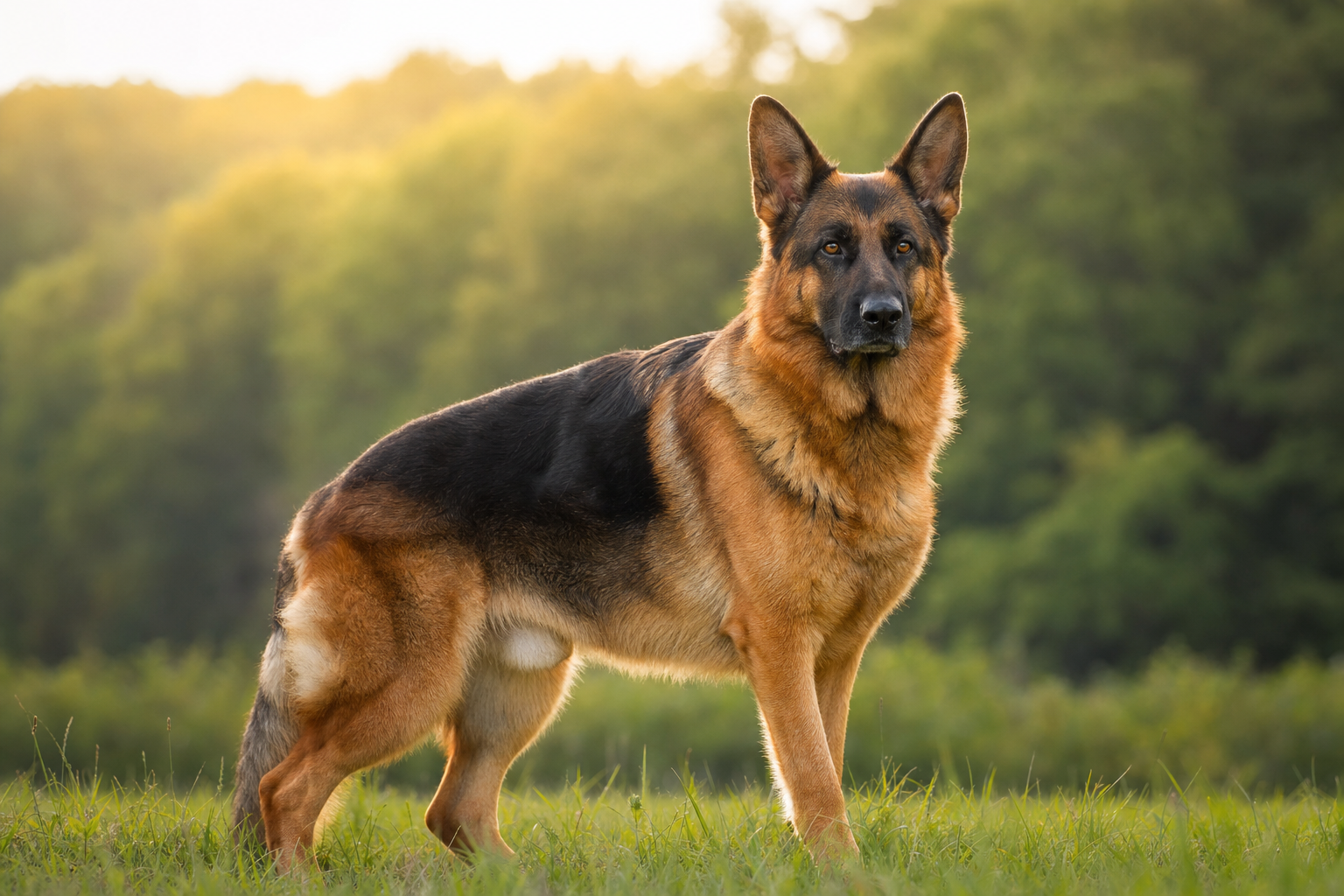
Whether you’re evaluating a puppy, entering the show ring, or just curious what a “correct” German Shepherd looks like, here are the core German Shepherd breed standards recognized by major kennel clubs like the AKC and FCI:
| Trait | Standard |
|---|---|
| Height (male) | 24–26 inches at the shoulder |
| Height (female) | 22–24 inches at the shoulder |
| Weight (male) | 65–90 lbs |
| Weight (female) | 50–70 lbs |
| Coat | Double coat — medium-length outer coat, dense undercoat |
| Colors | Black and tan, sable, black and red, all-black, and more |
| Body | Slightly longer than tall, level topline, sloping croup |
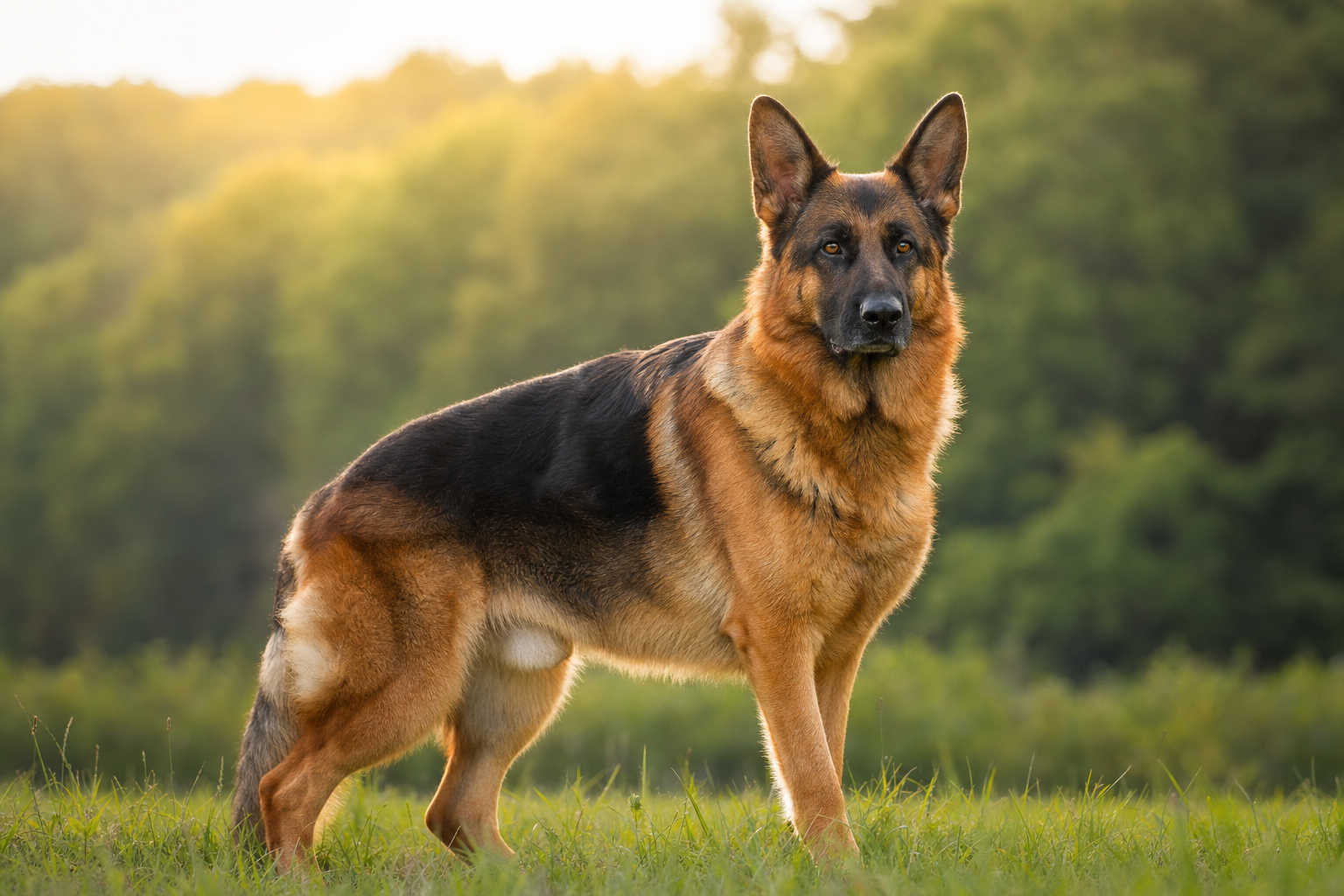
| Ears | Large, erect, and open toward the front |
| Gait | Smooth, efficient, ground-covering trot — a signature GSD trait |
| Lifespan | 9–13 years |
Judges and breeders look closely at structure because the GSD’s entire purpose — herding and endurance work — depends on proper movement. A dog with poor hip angulation or a weak topline isn’t just “off-standard” cosmetically; it genuinely can’t do the job the breed was built for.
4. German Shepherd Temperament: Living With One Day-to-Day
Here’s what nobody tells you in the pet store: German Shepherds are basically velcro dogs with a job to do. They need:
- Mental stimulation — puzzle toys, obedience training, scent work
- Physical exercise — 1–2 hours daily, minimum
- A clear leader — inconsistent rules confuse them and lead to behavior issues
- Early socialization — exposure to people, dogs, and environments before 16 weeks
- A job or purpose — even “fetch the mail” counts
Skip these, and you’ll end up with a bored, anxious 80-pound dog who redecorates your couch. Meet these needs, and you’ll have one of the most rewarding companions you’ll ever own.
5. The German Shepherd Puppy Care Guide
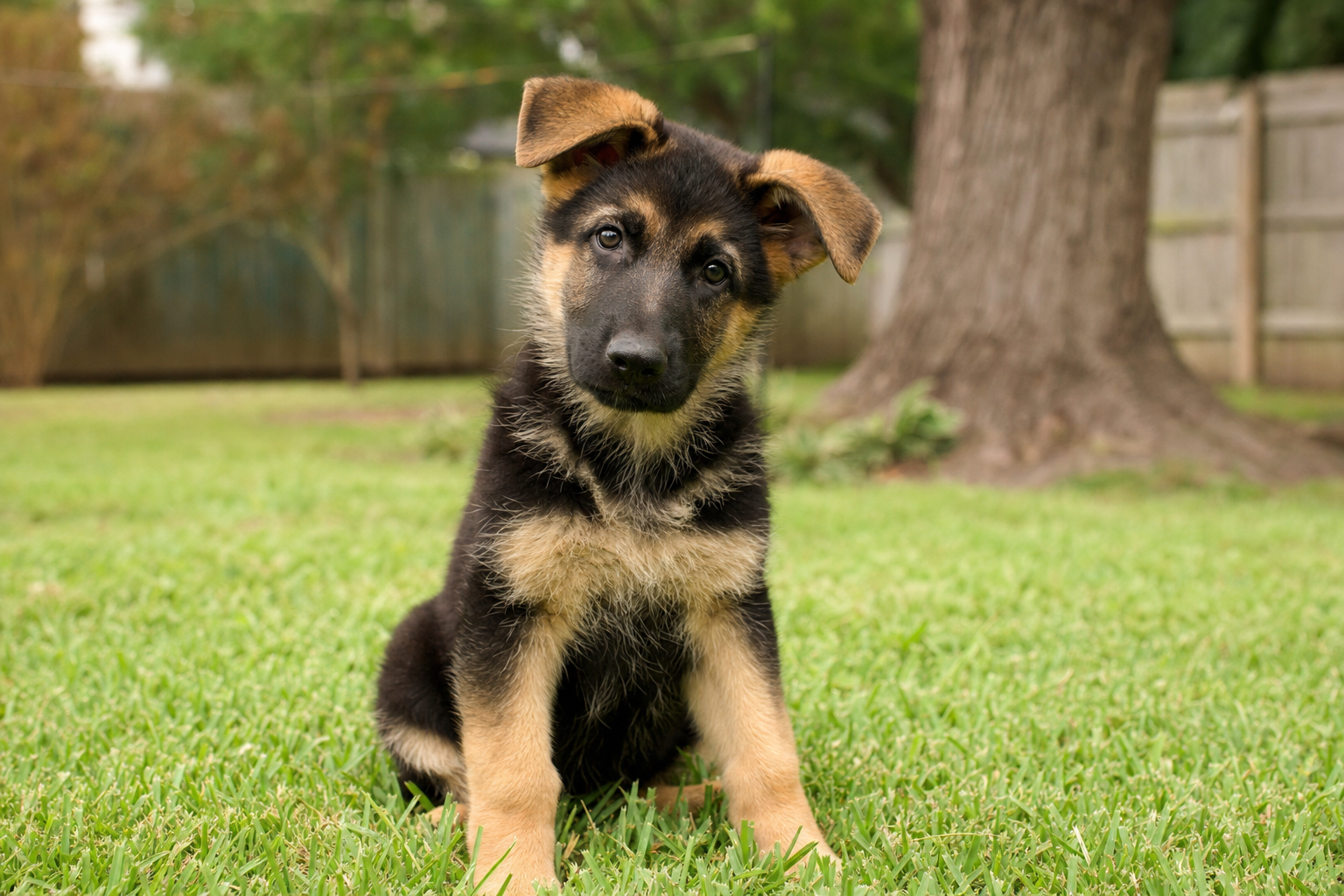
This is the section every new owner actually needs. Raising a German Shepherd puppy right in the first year sets the tone for the next decade of your life together. Here’s your German Shepherd puppy care guide, broken down by category.
Feeding Schedule by Age
| Age | Meals Per Day | Notes |
|---|---|---|
| 8–12 weeks | 4 meals | High-quality large-breed puppy food only |
| 3–6 months | 3 meals | Watch calcium/phosphorus ratio for joint health |
| 6–12 months | 2 meals | Transition to large-breed puppy formula, not adult food yet |
| 12+ months | 2 meals | Switch to adult large-breed formula |
Important: German Shepherd puppies grow fast, and growing too fast can damage developing joints. Always feed a large-breed-specific formula — never a generic or small-breed puppy food — to control calorie and calcium intake properly.
Socialization Checklist (0–16 Weeks)
- ✅ Introduce to at least 10 new people
- ✅ Expose to different surfaces (grass, tile, stairs, gravel)
- ✅ Controlled meetings with vaccinated, friendly dogs
- ✅ Car rides, vacuum sounds, doorbells, thunder recordings
- ✅ Gentle handling of paws, ears, and mouth (for future vet/grooming visits)
- ✅ Crate training started immediately
Training Priorities
- Name recognition and basic focus (Weeks 8–10)
- Potty training and crate routine (Weeks 8–16)
- Sit, down, stay, come (Weeks 10–16)
- Leash manners (Weeks 12+)
- Bite inhibition — critical for this mouthy, high-drive breed (ongoing through 6 months)
- Impulse control games (Weeks 16+) — this is where GSDs truly shine
Common Puppy Problem/Solution Chart
| Problem | Likely Cause | Solution |
|---|---|---|
| Excessive nipping/biting | Teething + herding instinct | Redirect to appropriate chew toys; yelp and withdraw attention |
| Ears not standing up by 6 months | Cartilage still developing or calcium imbalance | Consult vet; taping may help in some cases |
| Destructive chewing | Boredom or under-exercised | Increase mental stimulation, crate when unsupervised |
| Fear of loud noises | Insufficient early exposure | Gradual desensitization with treats and calm reinforcement |
| Excessive barking | Under-stimulation or territorial instinct | Structured exercise + “quiet” command training |
Vaccination & Vet Timeline
- 6–8 weeks: First round of vaccines (DHPP)
- 10–12 weeks: Second round of vaccines
- 14–16 weeks: Third round + rabies vaccine
- 6 months: Spay/neuter discussion with your vet (timing matters for large breeds — many vets recommend waiting until growth plates close)
- 12 months: Hip and elbow screening baseline (OFA or PennHIP)
6. Health Considerations Every Owner Should Know
German Shepherds are generally healthy, but their size and structure predispose them to a few known issues:
- Hip and elbow dysplasia — the most well-known GSD health concern; ask breeders for OFA/PennHIP-tested parents
- Degenerative myelopathy — a progressive spinal cord disease seen later in life
- Bloat (gastric torsion) — a medical emergency common in deep-chested breeds; avoid vigorous exercise right after meals
- Exocrine pancreatic insufficiency (EPI) — more common in GSDs than most breeds
- Allergies and skin sensitivities — watch for excessive licking or hot spots
Pro tip: A reputable breeder will happily show you health clearances for both parents. If they hesitate or dodge the question, walk away.
You can find a reputable breeder from our German Shepherd breeder directory HERE. Unlike ANY other breeder directories that are full of outdated information, our directories are updated every month.
7. Grooming and Shedding Reality Check
Let’s be blunt: German Shepherds shed. A lot. That double coat means near-constant shedding with two major “coat blow” seasons per year (spring and fall) where it looks like a second dog exploded in your house.
- Brush 2–3 times per week (daily during shedding season)
- Bathe only every 6–8 weeks — overbathing strips natural oils
- Check ears weekly for wax buildup or odor
- Trim nails every 3–4 weeks
- Invest in a good vacuum. Seriously.
8. Is the German Shepherd Right for You?
Here’s the honest gut check. A German Shepherd is a great fit if you:
- ✅ Want an active, engaged, trainable companion
- ✅ Have time for daily exercise and mental enrichment
- ✅ Are consistent with rules and training
- ✅ Don’t mind dog hair as part of your interior design
And maybe not the best fit if you:
- ❌ Travel constantly or work 12-hour days with no support system
- ❌ Want a low-shedding, low-energy dog
- ❌ Aren’t able to commit to ongoing training
Final Thoughts
The German Shepherd isn’t just a pretty face with pointy ears — it’s a working partner that thrives on purpose, structure, and connection with its people. Armed with real German Shepherd breed information, a clear understanding of German Shepherd breed standards, and a solid German Shepherd puppy care guide, you’re set up to raise a confident, well-adjusted dog who will genuinely have your back for the next decade-plus.
Got a GSD puppy at home right now? The work you put in during these first six months is the best investment you’ll ever make in this relationship. And feel free to add your German Shepherd experiences and insights in the comments section below.